Your Body: A Living Machine
The human body is made up of trillions of cells organized into tissues, organs, and organ systems — all working together to maintain life.
Organization Levels
Cells → Tissues → Organs → Organ Systems → Organism. Each level is more complex than the one before.
Homeostasis
The body constantly maintains a stable internal environment — temperature, pH, blood sugar — despite changing conditions.
Interdependence
No system works alone. Digestive, circulatory, and respiratory systems all cooperate to deliver energy to every cell.
Levels of Organization
The 11 Organ Systems
Click any system card. The first 6 go to their full lesson slides. The last 5 open a detailed info panel.
🍽️ Breaking Down Food
The digestive system breaks food into nutrients small enough to be absorbed into the bloodstream and used by cells for energy.
🎯 Main Function
Mechanical and chemical digestion → absorption of nutrients → elimination of waste
🔄 Path of Food
Mouth: Teeth crush food (mechanical). Saliva begins starch digestion with amylase (chemical).
Esophagus: Peristalsis (wave-like contractions) moves food to the stomach.
Stomach: HCl and pepsin break down proteins. Creates acidic chyme.
Small Intestine (≈6m): Most digestion AND nearly all nutrient absorption. Villi increase surface area enormously.
Large Intestine: Absorbs water; forms and expels feces.
🌬️ Gas Exchange
The respiratory system brings oxygen into the body and removes carbon dioxide — the waste product of cellular respiration.
🎯 Main Function
Intake of O₂ → gas exchange in the lungs → expulsion of CO₂
Airflow Pathway
🫧 Alveoli
Tiny air sacs surrounded by capillaries. O₂ diffuses into blood; CO₂ diffuses out. Walls are only ONE cell thick!
🎈 Diaphragm
Dome-shaped muscle. Contracts → lungs expand → air rushes in. Relaxes → lungs shrink → air pushed out.
❤️ The Body's Transport Network
The circulatory system delivers oxygen and nutrients to cells while removing carbon dioxide and waste products.
🎯 Main Function
Transport of oxygen, nutrients, hormones, and waste products throughout the body
🔴 Arteries
Carry blood AWAY from the heart. Thick, muscular walls. Most carry oxygenated blood.
🔵 Veins
Carry blood TOWARD the heart. Have valves to prevent backflow. Most carry deoxygenated blood.
🫀 Capillaries
Only ONE cell thick — where exchange happens. O₂ and nutrients leave blood; CO₂ and waste enter blood.
Double Circulation Loop
| Blood Component | Function |
|---|---|
| 🔴 Red Blood Cells | Carry oxygen via hemoglobin |
| ⚪ White Blood Cells | Fight infection (immune defense) |
| 🩸 Platelets | Clot blood to stop bleeding |
| 💛 Plasma | Liquid portion; carries nutrients, hormones, waste |
🧠 The Body's Control Center
The nervous system detects stimuli, processes information, and coordinates responses throughout the entire body.
🧠 Central Nervous System (CNS)
Brain + Spinal Cord. Three brain regions: cerebrum (thinking), cerebellum (balance), brain stem (vital functions).
⚡ Peripheral Nervous System (PNS)
All nerves outside the CNS. Carries sensory signals TO the CNS and motor signals FROM the CNS.
⚡ The Neuron — Basic Unit
Key parts: dendrites (receive signals) → cell body → axon (sends signal) → synapse (gap crossed by neurotransmitters).
Reflex Arc
💪🦴 Movement & Support
These two systems work together to provide movement, support, and protection for the body.
🦴 Skeletal System
206 bones. Functions: support, organ protection, movement, blood cell production (red marrow), mineral storage.
💪 Muscular System
Over 600 muscles. Muscles PULL in pairs — bicep contracts while tricep relaxes. Produces heat and maintains posture.
| Muscle Type | Location | Control | Appearance |
|---|---|---|---|
| 💪 Skeletal | Attached to bones | Voluntary | Striated |
| ❤️ Cardiac | Heart only | Involuntary | Striated, branched |
| 🌀 Smooth | Organs, vessels | Involuntary | Non-striated |
🔗 How Systems Work Together
No organ system operates in isolation. The body's ability to maintain homeostasis depends on constant communication and cooperation.
Negative Feedback Loop (e.g., body temperature)
Respiratory + Circulatory
Lungs load O₂ onto red blood cells; heart pumps oxygenated blood to the body; CO₂ returned to lungs.
Digestive + Circulatory
Nutrients absorbed in small intestine enter capillaries → blood delivers glucose and amino acids to all cells.
Nervous + Muscular
Motor neurons fire signals to muscle fibers triggering contractions. Reflexes are processed at the spinal cord.
Endocrine + Circulatory
Hormones (like insulin) travel in blood to target organs to regulate metabolism, growth, and reproduction.
Skeletal + Circulatory
Red bone marrow inside bones produces all blood cells. Calcium in bones is regulated by hormones.
Immune + Circulatory
White blood cells travel through the bloodstream to reach sites of infection anywhere in the body.
📚 Key Terms — Flip to Reveal
Click each card to flip it and see the definition.
👆 Click a card to flip it
📹 Watch & Learn
Click a video card, then click the red button to open it on YouTube.
🏠 Human Body Systems Overview (2024)
🍽️ Digestive System
🌬️ Respiratory System
❤️ Circulatory System
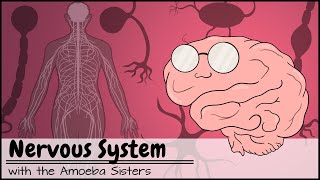
🧠 Nervous System
✅ Check Your Understanding
Answer all 10 questions. Read each carefully!