DNA & Protein Synthesis
A self-paced lesson aligned to Virginia Biology SOL BIO.3 — exploring how DNA stores genetic information and directs protein synthesis.
- How scientists discovered that DNA is the genetic material
- How the double helix model of DNA was developed
- The structure of DNA — nucleotides, base pairing, and the double helix
- How DNA replicates (copies itself) before cell division
- The differences between DNA and RNA
- The three types of RNA: mRNA, tRNA, and rRNA
- How transcription converts DNA → mRNA
- How translation converts mRNA → protein
Key Terms
Learn these terms — they appear on the Virginia Biology SOL and are essential for understanding DNA and protein synthesis.
Discovery of DNA
How did scientists figure out that DNA — not protein — is the molecule that carries genetic information? It took several key experiments over many decades.
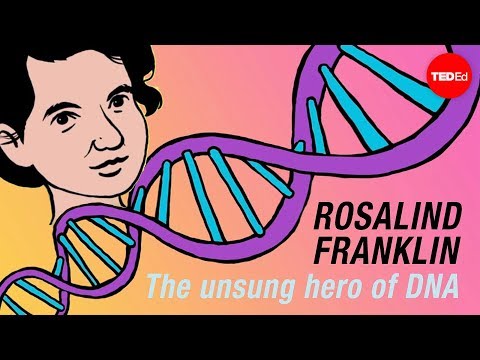
Models of DNA
Science improves over time as new evidence is gathered. Before Watson and Crick's accepted model, other scientists proposed different structures for DNA.
DNA Structure
DNA looks like a twisted ladder. Understanding its structure explains how it stores information and copies itself.
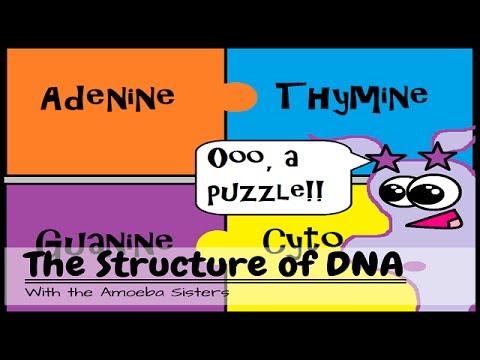
Key Things to Know About DNA Structure
- DNA is made of nucleotides, each with a sugar (deoxyribose), a phosphate group, and a nitrogenous base
- The four bases are Adenine (A), Thymine (T), Guanine (G), and Cytosine (C)
- Base pairing rules: A always pairs with T, and G always pairs with C
- The two strands run in opposite directions (antiparallel) and are held by hydrogen bonds
- The outside of the ladder is the sugar-phosphate backbone; the rungs are the base pairs
DNA Replication
Before a cell divides, it must copy its entire DNA so each new cell gets a complete set of genetic instructions.
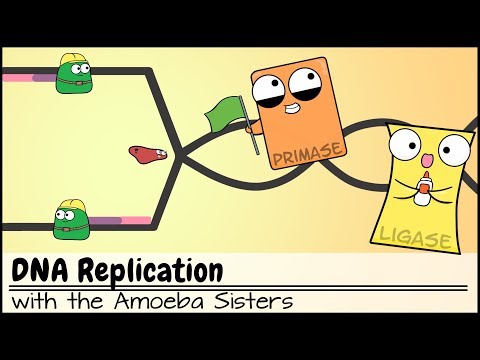

Key Enzymes (Know These!)
- Helicase — unzips the DNA double helix by breaking hydrogen bonds
- DNA Polymerase — builds the new complementary strand using base-pairing rules
DNA vs RNA
DNA and RNA are both nucleic acids, but they have important differences in structure and function.

| Feature | 🧬 DNA | 🔴 RNA |
|---|---|---|
| Full Name | Deoxyribonucleic Acid | Ribonucleic Acid |
| Sugar | Deoxyribose | Ribose |
| Bases | A, T, G, C | A, U (Uracil), G, C |
| Strands | Double-stranded | Single-stranded |
| Shape | Double helix | Single strand (various shapes) |
| Location | Nucleus | Nucleus and cytoplasm |
| Function | Stores genetic information | Carries and uses genetic information to make proteins |
In DNA, Thymine (T) pairs with Adenine (A). DNA is very stable because it needs to store information for a long time in the nucleus.
In RNA, Uracil (U) replaces Thymine and pairs with Adenine (A). RNA is single-stranded and shorter-lived than DNA — it is made, used, then broken down.
Types of RNA
There are three main types of RNA involved in protein synthesis. Each has a specific job.
Easy Way to Remember
- mRNA = the Message (carries the code)
- tRNA = the Truck (delivers amino acids)
- rRNA = the Ribosome (the factory where it all happens)
Transcription
Transcription is Step 1 of protein synthesis. A section of DNA is copied into mRNA. This happens in the nucleus.
Notice: wherever DNA has A, mRNA gets U — not T. This is the key difference between DNA replication and transcription.
Translation
Translation is Step 2 of protein synthesis. The ribosome reads the mRNA and builds a protein. This happens in the cytoplasm.
| Codon | Meaning | Codon | Meaning |
|---|---|---|---|
| AUG | START (Methionine) | UUU / UUC | Phenylalanine |
| UAA | STOP | GGU / GGC / GGA / GGG | Glycine |
| UAG | STOP | GCU / GCC / GCA / GCG | Alanine |
| UGA | STOP | AAA / AAG | Lysine |
The complete genetic code has 64 codons for 20 amino acids. Most amino acids have more than one codon — this is called redundancy.
Central Dogma of Molecular Biology
- DNA → mRNA (Transcription, in the nucleus)
- mRNA → Protein (Translation, at the ribosome in the cytoplasm)
- DNA is the master copy — it stays in the nucleus and never leaves
Interactive Lab
Practice base pairing and codon decoding — two core skills on the Virginia Biology SOL.
= Start-Phe-Glu-Stop
Knowledge Check
10 questions written in Virginia Biology SOL style. Answer all questions, then click Submit to see your score and explanations.
Your Score