By the end of this module you'll be able to identify and explain the function of all major organelles, compare prokaryotic and eukaryotic cells, explain how the cell membrane controls what enters and leaves, describe the cell cycle, and explain how cells specialize.
Each lesson has 3 parts: Watch a video to build background, Study the interactive slides, then Practice with an assignment or quick check. Mark each lesson complete to track your progress.
| Feature | Prokaryote | Eukaryote |
|---|---|---|
| Membrane-bound nucleus | ✗ No | ✓ Yes |
| Membrane-bound organelles | ✗ No | ✓ Yes |
| Ribosomes | ✓ Small (70S) | ✓ Larger (80S) |
| DNA shape | Circular, in cytoplasm | Linear, in nucleus |
| Cell wall | Usually present | Plants/fungi only |
| Examples | Bacteria, Archaea | Plants, Animals, Fungi |
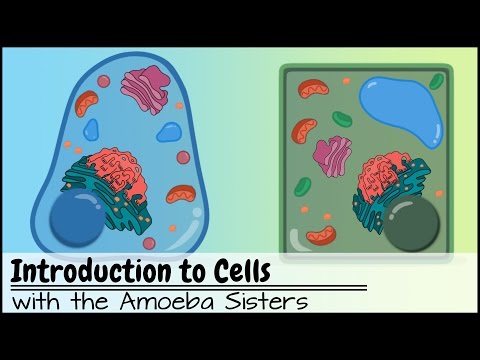
Covers cell theory history, prokaryotic vs eukaryotic comparison, and a tour of organelle functions. Great starting point with clear visuals.
Detailed comparison of bacterial cells and eukaryotic cells, including structural differences and evolutionary relationships.

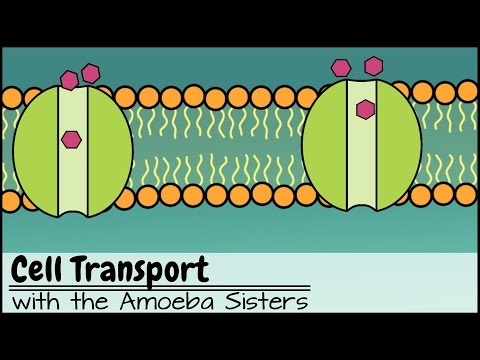
Explains the phospholipid bilayer, selective permeability, diffusion, osmosis, and active transport with memorable analogies.
Hank Green walks through the full cell cycle, each phase of mitosis, and why accurate DNA copying matters. Engaging and packed with detail.
Explains how one fertilized egg gives rise to hundreds of cell types through gene expression, including an intro to stem cells.

- Draw a large plant cell (min. half-page). Label: cell wall, cell membrane, nucleus, chloroplast, large central vacuole, mitochondria, ribosomes, ER, Golgi.
- Draw a large animal cell. Label: cell membrane, nucleus, mitochondria, ribosomes, ER, Golgi, lysosomes, centrioles, small vacuoles.
- Circle organelles present in BOTH cells in blue. Circle plant-only organelles in green. Circle animal-only organelles in red.
- Write a 2–3 sentence "function summary" for any 6 organelles of your choice.
- At the bottom, write: "How is the structure of the mitochondria related to its function?" (3–4 sentences, connect shape to energy production)
- Purpose: State the question you are investigating about osmosis and tonicity.
- Hypothesis: Write an if/then prediction for what will happen to the potato/tubing in hypertonic, hypotonic, and isotonic solutions.
- Procedure: Summarize the steps in your own words (no copy-paste).
- Data Table: Record mass/length changes before and after for each solution type.
- Analysis: Calculate % change in mass. Explain WHY each result occurred using osmosis vocabulary (solute concentration, water potential, tonicity).
- Conclusion: Was your hypothesis supported? Connect your results to how plant cells maintain turgor pressure and how animal cells respond to different environments (e.g., red blood cells in salt water).
- Print or digitally view the provided onion root tip image set (6 images).
- For each image, identify the cell cycle phase (Interphase, Prophase, Metaphase, Anaphase, Telophase, Cytokinesis).
- Justify your identification with at least ONE observable feature (e.g., "chromosomes are aligned at the metaphase plate").
- Count how many cells in your image are in Interphase vs. Mitosis. Calculate the percentage of time spent in each. What does this tell you about which phase takes longest?
- Short answer (5–6 sentences): Why is it important that mitosis produces genetically identical daughter cells? What would happen if an error occurred during DNA replication?
- Choose one: neuron, red blood cell, muscle cell, root hair cell, guard cell, or sperm cell.
- Draw and label the specialized cell, highlighting features that distinguish it from a "typical" cell.
- Explain how at least 2 structural adaptations help the cell perform its specific job.
- Explain how this cell type works with other cell types to support an organ system. (Example: neuron + glial cells + muscle cells = nervous + muscular system communication)
- Reflection: How does the process of differentiation (all cells having the same DNA but looking different) connect to gene expression? Write 3–4 sentences.